A rare earth discovery in north-west Botswana is sharpening the global contest for critical minerals, as Canadian explorer Tsodilo Resources advances what could become one of Southern Africa’s more strategically significant new deposits.
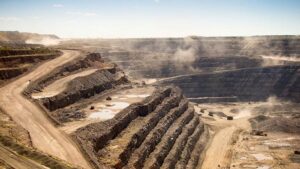
Tsodilo Resources Limited confirmed a high-grade polymetallic discovery at its Gcwihaba Metals project near Shakawe. The deposit contains all 15 rare earth elements listed by the U.S. Geological Survey, alongside copper, cobalt, nickel, vanadium and silver. The mineralisation lies between 20 and 50 metres below surface, a relatively shallow depth that may support commercial extraction if feasibility and environmental assessments prove favourable.
The C26 and C27 targets were first identified through magnetic and gravity anomalies before diamond core drilling confirmed skarn-type mineralisation hosting a broad suite of critical minerals. Technical analysis indicates the presence of the full spectrum of rare earth elements included on the 2025 U.S. Critical Minerals List. While still at an early stage, the scale and composition of the find place Botswana more firmly within supply chains tied to electric vehicles, wind turbines, battery storage, advanced electronics and defence technologies.
For Botswana, long associated with diamonds through its partnership with De Beers Group, the discovery reinforces a deliberate shift toward base metals and critical minerals. Diamonds remain central to exports but the government has prioritised diversification to reduce vulnerability to commodity cycles. Botswana’s reputation for political stability, regulatory clarity and established mining infrastructure enhances its appeal at a time when mineral security has become geopolitically sensitive.
Globally, rare earth supply remains heavily concentrated in China, particularly in processing capacity dominated by firms such as China Northern Rare Earth Group. Western governments have responded with industrial policies aimed at diversifying sourcing and reducing strategic exposure. The International Energy Agency projects that demand for critical minerals could more than double by 2030 under current energy transition pathways.
Against that backdrop, Canadian-backed exploration in Botswana supports broader efforts by allied economies to anchor supply chains in stable jurisdictions. Although Canada and the United States remain close partners, Washington’s push to localise and secure mineral supply chains has intensified competition among Western producers. Expanding projects in politically stable African jurisdictions allows Canadian firms to remain embedded in North American and transatlantic supply ecosystems.
For Botswana, a commercially viable development at Gcwihaba would extend its export portfolio into high-value minerals linked to clean energy and advanced manufacturing. Tsodilo Resources said it will continue delineation drilling and technical studies while engaging regulators and local communities. Any future mine would be subject to environmental approvals and Botswana’s mining legislation.
As global powers reposition supply chains for a low-carbon era, Botswana’s emerging rare earth potential underscores a broader shift, that Africa’s mineral resources are moving from peripheral assets to strategic leverage points in the energy transition.